
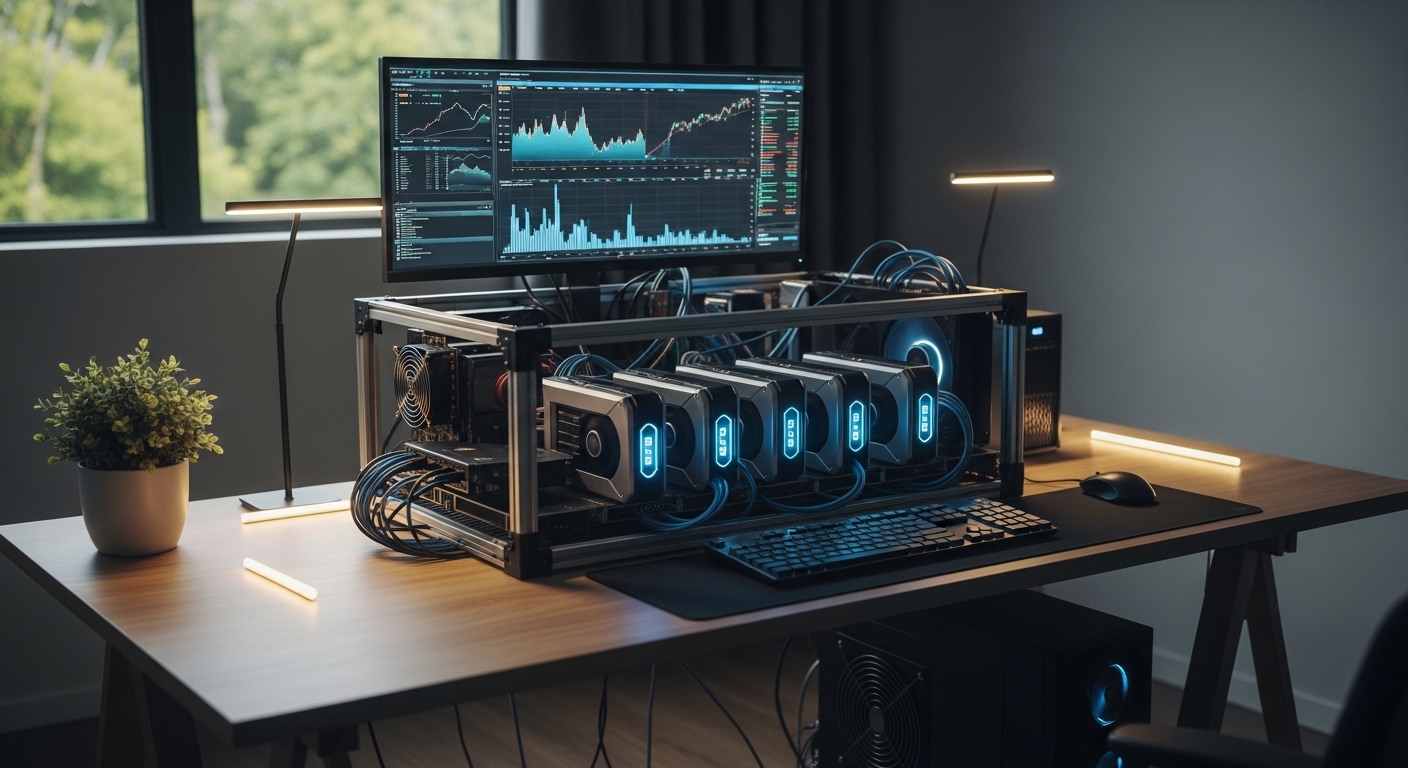
How to start crypto mining at home with low electricity cost is a question many beginners ask when exploring ways to earn cryptocurrency without investing heavily in expensive infrastructure. Crypto mining may sound technical, but with the right strategy, it can become a realistic source of passive income and a long-term online business.
This guide explains everything step by step, from understanding crypto mining basics to minimizing electricity costs, choosing the right hardware, and calculating profitability. Whether you want to mine as a hobby or scale it into a serious income stream, this article will help you start smart and sustainably.
What Is Crypto Mining?
Crypto mining is the process of validating blockchain transactions and securing a cryptocurrency network. Miners use computing power to solve cryptographic puzzles. In return, they earn rewards in the form of cryptocurrency.
Popular mineable coins include Bitcoin alternatives such as Ethereum Classic, Litecoin, Monero, and Kaspa. These are often more suitable for home miners due to lower hardware and electricity demands.
Is Crypto Mining at Home Still Profitable?
Yes, crypto mining at home can still be profitable if you manage electricity costs and choose the right setup. The biggest expense for miners is electricity. This is why learning how to start crypto mining at home with low electricity cost is essential.
Unlike high-risk trading, mining generates consistent rewards over time. It works well for people looking to diversify income sources, similar to affiliate marketing, affiliate vs dropshipping strategies, or running a dropshipping business.
Understanding Electricity Costs in Crypto Mining
Why Electricity Cost Matters
Mining devices run continuously. Even efficient hardware can consume hundreds of watts per hour. High electricity rates can quickly erase profits.
For example, a miner consuming 600W running 24/7 uses around 432 kWh per month. At $0.20 per kWh, that’s $86 monthly. Reducing this cost is key to success.
How to Check Your Electricity Rate
Check your electricity bill for the price per kilowatt-hour (kWh). Rates under $0.12/kWh are ideal for home mining. Anything above $0.20/kWh requires careful optimization.
Best Cryptocurrencies to Mine at Home
Not all cryptocurrencies are suitable for home mining. Bitcoin mining now requires industrial-scale operations. Instead, focus on these options:
- Monero (XMR) – CPU-friendly and energy-efficient
- Kaspa (KAS) – Fast block times and low power usage
- Ethereum Classic (ETC) – GPU mining friendly
- Ravencoin (RVN) – Designed for decentralized mining
You can explore profitability using tools like
WhatToMine.
Choosing the Right Mining Hardware
CPU Mining
CPU mining uses your computer’s processor. It has low power usage and is beginner-friendly. Coins like Monero are optimized for CPU mining.
Pros include low electricity consumption and minimal setup. However, profits are usually modest.
GPU Mining
GPU mining offers higher rewards than CPU mining. Graphics cards such as NVIDIA RTX or AMD Radeon series are commonly used.
Choose GPUs with good hash rate-to-watt ratios to keep electricity costs low.
ASIC Mining (Not Recommended for Most Homes)
ASIC miners are powerful but consume significant electricity and produce heat and noise. They are generally unsuitable for low-cost home mining setups.
How to Reduce Electricity Costs When Mining at Home
Use Energy-Efficient Hardware
Efficiency matters more than raw power. Always compare hash rate per watt. A slightly slower miner with lower power usage can be more profitable.
Undervolt Your GPU
Undervolting reduces power consumption without significantly affecting performance. Tools like MSI Afterburner help fine-tune voltage and clock speeds.
Mine During Off-Peak Hours
Some electricity providers offer cheaper night rates. Running miners during off-peak hours can significantly cut costs.
Optimize Cooling
Efficient airflow prevents overheating and reduces the need for extra fans or air conditioning. Place miners in well-ventilated areas.
Consider Renewable Energy
If possible, solar panels can dramatically reduce long-term electricity costs. Even partial solar usage helps offset mining expenses.
Step-by-Step: How to Start Crypto Mining at Home with Low Electricity Cost
Step 1: Choose Your Coin
Select a coin that matches your hardware and electricity constraints.
Step 2: Set Up a Wallet
Create a secure crypto wallet to store mining rewards. Hardware wallets or reputable software wallets are recommended.
Step 3: Install Mining Software
Popular mining software includes XMRig, GMiner, and PhoenixMiner. Always download from official sources.
Step 4: Join a Mining Pool
Mining pools combine computing power and provide steady payouts. Solo mining is rarely profitable for beginners.
Step 5: Monitor Performance
Track hash rate, temperature, and power usage. Adjust settings regularly to maximize efficiency.
Mining as a Passive Income Strategy
Crypto mining works well as a long-term passive income strategy. Once set up, it requires minimal daily management.
Many online entrepreneurs combine mining with other income streams such as affiliate marketing, blogging, or e-commerce. Compared to affiliate vs dropshipping, mining relies more on infrastructure than traffic or ads.
As an online business, mining offers predictable output and less dependency on algorithms or platforms.
Risks and Things to Consider
Crypto prices fluctuate, which affects profitability. Hardware also depreciates over time.
Regulations vary by country. Always check local laws regarding cryptocurrency mining.
Finally, ensure your home’s electrical wiring can handle continuous load safely.
Internal and External Resources
To expand your income strategies, explore guides on building an
online business or monetizing through
affiliate marketing.
For mining profitability calculators and updates, visit
Minerstat.
Final Thoughts
Learning how to start crypto mining at home with low electricity cost allows beginners to enter the crypto space with minimal risk. By choosing efficient hardware, optimizing power usage, and mining the right coins, home mining can be both sustainable and profitable.
Whether you see it as a hobby or a serious income stream, crypto mining can complement other digital ventures and strengthen your financial diversification strategy.