
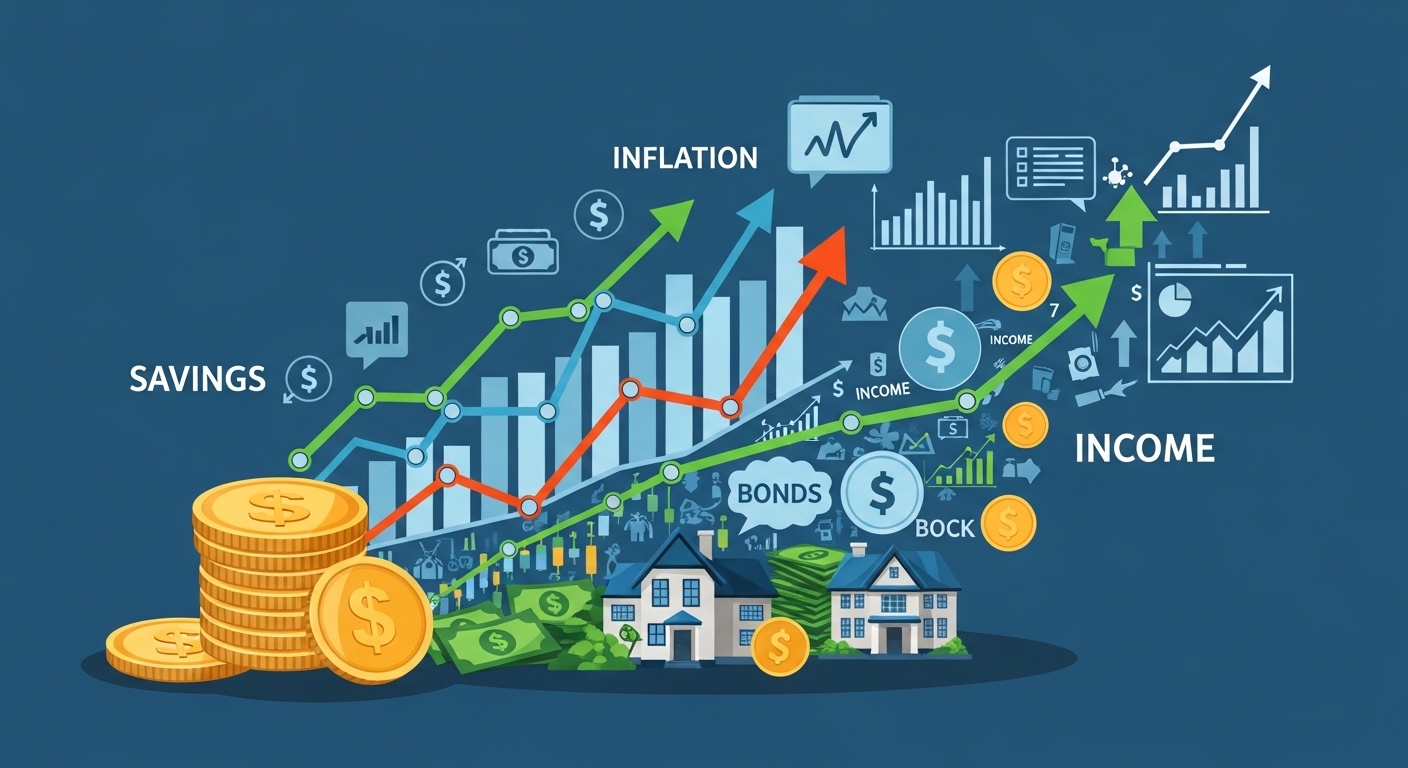
How to Protect Your Money from Inflation and Rising Costs is one of the most important personal finance questions people are asking today. Prices are rising fast. Everyday essentials cost more. Savings lose value if they sit idle. If you do nothing, inflation quietly eats your purchasing power.
The good news is this. You can take control. With the right strategies, you can protect your income, grow your wealth, and stay financially stable even when the cost of living keeps climbing.
This guide explains practical, proven ways to protect your money from inflation and rising costs. The strategies are simple, realistic, and suitable for beginners and experienced investors alike.
What Inflation Really Does to Your Money
Inflation means your money buys less over time. A product that costs $100 today may cost $110 next year. If your income or savings do not grow at the same pace, you lose purchasing power.
Leaving money in a low-interest savings account is one of the fastest ways to lose value during inflationary periods. Even if your balance stays the same, its real-world value drops.
This is why understanding How to Protect Your Money from Inflation and Rising Costs is not optional. It is essential.
Build an Inflation-Resistant Financial Foundation
Create a Flexible Budget That Adjusts with Inflation
A static budget fails during inflation. Your expenses change, so your budget must adapt. Track your spending monthly. Identify rising categories like food, rent, and utilities.
Cut costs that do not add long-term value. Redirect savings toward investments or income-generating assets. A flexible budget helps you stay ahead of rising prices.
You can explore budgeting frameworks on trusted sites like
Investopedia to strengthen your financial base.
Build an Emergency Fund That Grows
An emergency fund protects you from debt during uncertain times. Aim for three to six months of expenses.
Instead of leaving this fund idle, consider high-yield savings accounts or money market funds. These options help reduce inflation damage while keeping your cash accessible.
Investing Strategies to Beat Inflation
Invest in Assets That Historically Outpace Inflation
To truly protect your money, you need growth. Long-term investments have historically outperformed inflation.
Examples include:
- Stocks and equity index funds
- Real estate
- Commodities such as gold
Stocks represent ownership in businesses. Over time, companies raise prices, grow revenue, and increase profits. This makes equities one of the most effective tools in How to Protect Your Money from Inflation and Rising Costs.
Real Estate as an Inflation Hedge
Real estate often rises in value during inflation. Rental income can increase alongside living costs.
You do not need to buy property directly. Real Estate Investment Trusts (REITs) allow you to invest with smaller amounts while earning passive income.
Learn more about REITs from
Nareit, a trusted industry resource.
Create Multiple Income Streams
Why Relying on One Income Is Risky
Inflation hurts fixed incomes the most. If your salary does not increase, your lifestyle shrinks.
Building multiple income streams reduces risk and increases flexibility. This is where passive income becomes powerful.
Online Income Opportunities That Scale
The internet has created endless ways to earn beyond a traditional job. Many people compare affiliate vs dropshipping when starting an online venture.
Both models fall under the broader category of online business, but they work differently.
Affiliate marketing allows you to earn commissions by promoting other companies’ products. You do not handle inventory or customer support.
A dropshipping business involves selling products through an online store while suppliers handle fulfillment.
Both models can generate income that grows with effort and strategy. Over time, these models can produce scalable passive income that offsets rising living costs.
For beginners, affiliate marketing often has lower startup risk and costs.
Protect Your Savings with Smart Cash Management
Avoid Letting Cash Sit Idle
Cash is necessary for liquidity, but too much cash loses value during inflation.
Split your money into three categories:
- Spending cash
- Emergency savings
- Growth investments
This structure ensures your money works for you while remaining accessible.
Use High-Yield Accounts and Inflation-Linked Products
Look for savings products that offer competitive interest rates. Treasury Inflation-Protected Securities (TIPS) are designed to adjust with inflation.
While returns may be modest, they help preserve purchasing power.
Reduce the Impact of Rising Costs
Negotiate and Optimize Fixed Expenses
Inflation raises costs, but many bills are negotiable. Review subscriptions, insurance, and service providers regularly.
Even small monthly savings add up over time and free cash for investing.
Invest in Skills That Increase Earning Power
One of the strongest defenses against inflation is higher income.
Learning high-value skills like digital marketing, coding, or content creation increases your ability to earn more.
Skills-based income grows faster than inflation and supports long-term financial stability.
Long-Term Mindset for Financial Protection
Understanding How to Protect Your Money from Inflation and Rising Costs is not about quick fixes. It is about consistency.
Inflation rewards those who plan ahead. Small actions today compound into meaningful results tomorrow.
Stay disciplined. Review your strategy annually. Adjust when needed.
Final Thoughts: Take Action Before Inflation Takes More
Inflation does not announce itself. It slowly reduces your quality of life if you ignore it.
By budgeting smartly, investing wisely, building multiple income streams, and leveraging online business models like affiliate marketing and dropshipping business, you can stay ahead.
The key is action. Start with one change today. Your future self will thank you.