
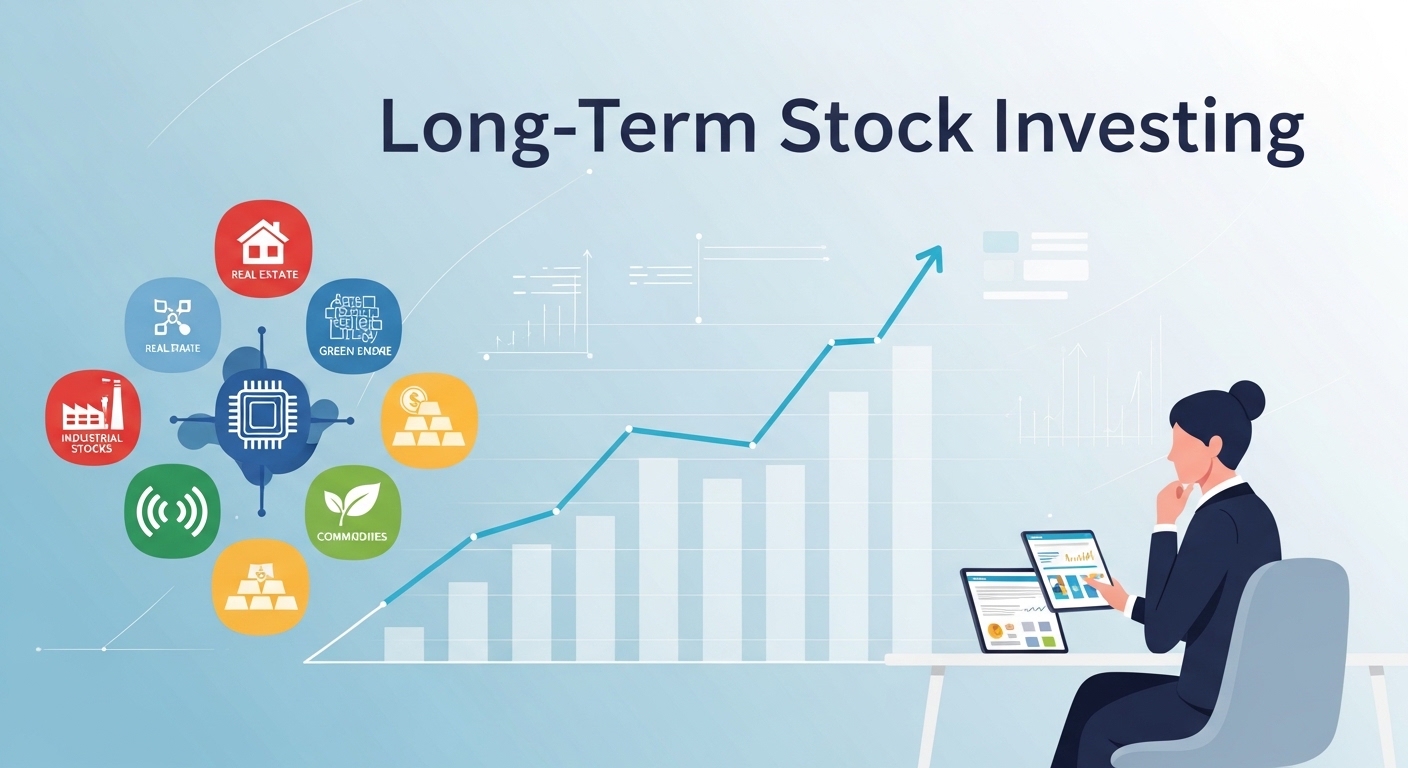
Learning how to start investing in stocks for long-term growth is one of the smartest financial decisions you can make. Unlike short-term trading, long-term investing focuses on building wealth steadily over time by benefiting from compound growth, dividends, and market expansion.
If you are a beginner, the stock market may feel overwhelming. Charts, financial jargon, and daily price swings can create fear and confusion. The good news is that long-term investing does not require perfect timing or advanced knowledge. It requires patience, consistency, and a clear strategy.
This guide will walk you through everything you need to know to start investing in stocks confidently and safely for long-term growth.
Why Long-Term Stock Investing Works
The stock market has historically rewarded patient investors. While prices fluctuate in the short term, long-term trends reflect economic growth, innovation, and rising corporate profits.
Here are a few reasons why long-term investing is powerful:
- Compounding grows your money over time.
- Short-term volatility becomes less important.
- Lower taxes compared to frequent trading.
- Less stress and emotional decision-making.
Long-term investing also supports the goal of building passive income through dividends and capital appreciation.
Set Clear Financial Goals Before Investing
Before you buy your first stock, you need to define your goals. Knowing why you are investing helps you stay disciplined during market ups and downs.
Common Long-Term Investment Goals
- Retirement planning
- Buying a home
- Funding education
- Building generational wealth
Your goals will influence how much risk you can take and how long you should stay invested.
Understand How the Stock Market Works
When you invest in stocks, you are buying ownership in a company. As the company grows, your shares may increase in value. Some companies also pay dividends, which provide regular income.
Stocks are traded on exchanges, and prices move based on supply, demand, earnings, and investor expectations.
For beginners, it is important to focus on understanding fundamentals rather than daily price movements.
Choose the Right Investment Account
To start investing in stocks, you need an investment account. The right account depends on your country and financial goals.
Popular Account Options
- Tax-advantaged retirement accounts
- Standard brokerage accounts
- Robo-advisor platforms
Many beginner-friendly platforms offer low fees and educational tools. You can compare options using trusted resources like Investopedia.
Start with a Simple Long-Term Strategy
Successful long-term investors keep things simple. You do not need dozens of stocks or complex strategies.
Buy and Hold Investing
This strategy involves buying high-quality stocks or funds and holding them for years. It reduces trading costs and emotional mistakes.
Diversification
Diversification means spreading your investments across different companies and industries. This reduces risk and protects your portfolio from major losses.
Many beginners start with index funds or ETFs because they offer instant diversification.
How Much Money Do You Need to Start?
You do not need a large amount of money to begin. Many platforms allow you to start investing with small amounts or buy fractional shares.
What matters more than the amount is consistency. Investing regularly builds momentum over time.
This approach complements other income strategies such as running an online business or exploring affiliate marketing.
Understand Risk and Market Volatility
All investments involve risk. Stock prices can fall, sometimes sharply. Long-term investors accept volatility as part of the process.
The key is not reacting emotionally to short-term losses. History shows that markets recover over time.
Invest only money you do not need in the short term, and keep an emergency fund separate.
Reinvest Dividends for Faster Growth
Many companies pay dividends to shareholders. Reinvesting these dividends allows you to buy more shares, accelerating compound growth.
Over decades, reinvested dividends can significantly increase your total returns.
Avoid Common Beginner Mistakes
New investors often make avoidable mistakes that hurt long-term performance.
Mistakes to Avoid
- Trying to time the market
- Chasing hot stocks
- Panic selling during downturns
- Ignoring fees and taxes
Consistency beats perfection when learning how to start investing in stocks for long-term growth.
Balance Investing with Other Income Streams
Stock investing works best when combined with active income sources. Many investors reinvest profits from side projects into their portfolios.
For example, comparing affiliate vs dropshipping models can help you decide which digital income stream suits your lifestyle. Both can support your investing journey when managed correctly.
You can explore guides on building a dropshipping business or scaling affiliate marketing as complementary strategies.
Track Progress but Stay Patient
Review your portfolio periodically, but avoid daily monitoring. Long-term growth takes time.
Adjust your strategy only when your goals or financial situation change.
Investing is not about quick wins. It is about discipline, learning, and patience.
Final Thoughts on Long-Term Stock Investing
Learning how to start investing in stocks for long-term growth is a journey, not a one-time action. By setting clear goals, choosing the right investments, and staying consistent, you can build wealth steadily over time.
You do not need to be an expert to succeed. Start small, stay informed, and let time work in your favor.
If you are ready to take control of your financial future, long-term investing is one of the most reliable paths available.